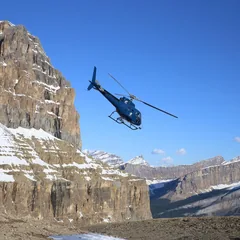
Banff/Jasper: Canadian Rockies Scenic Helicopter Tour
★ 4.9 · 233 reviews
- The cheapest helicopter on this page
- Thirty minutes over glaciers, waterfalls and icefields
- 233 reviews at 4.9
- Free cancellation
Glaciers
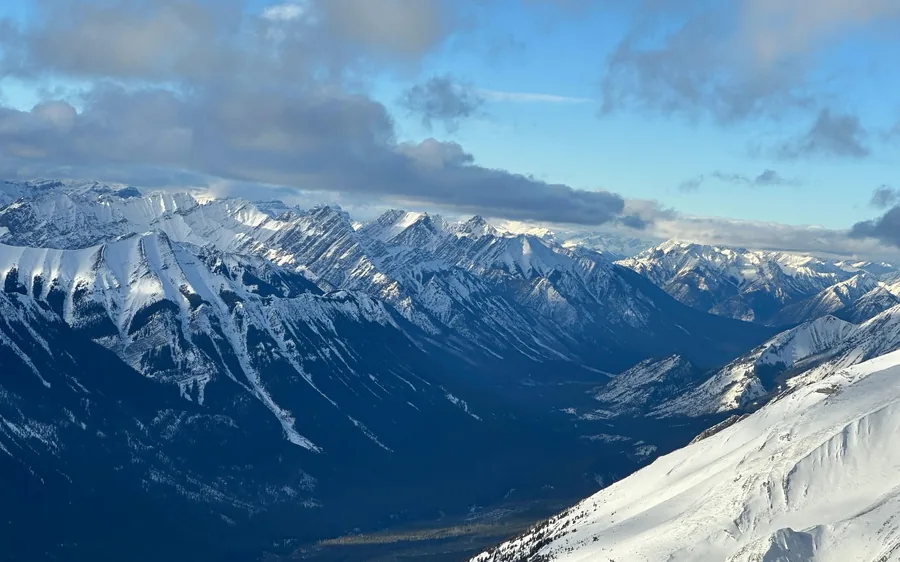
This is what you are actually buying. The ice along the Continental Divide has no road to it, almost no trail to it, and it is the one thing a Banff helicopter tour reaches that nothing else in a normal Rockies trip does. Here is which flights reach which ice, and what it looks like from two hundred metres above.

Quick answer
Every flight on this page reaches ice, and the cheapest one is built around it. The thirty-minute flight at $199 is described by its operator as glaciers, waterfalls and icefields, and it carries 233 ratings at 4.9. For a single named mountain and its glaciers, the thirty-five-minute Mount Assiniboine flight at $344 is the Banff helicopter tour to book.
What you are looking at
Valley glaciers seen whole: accumulation, crevasses, snout — and the source of the turquoise downstream.
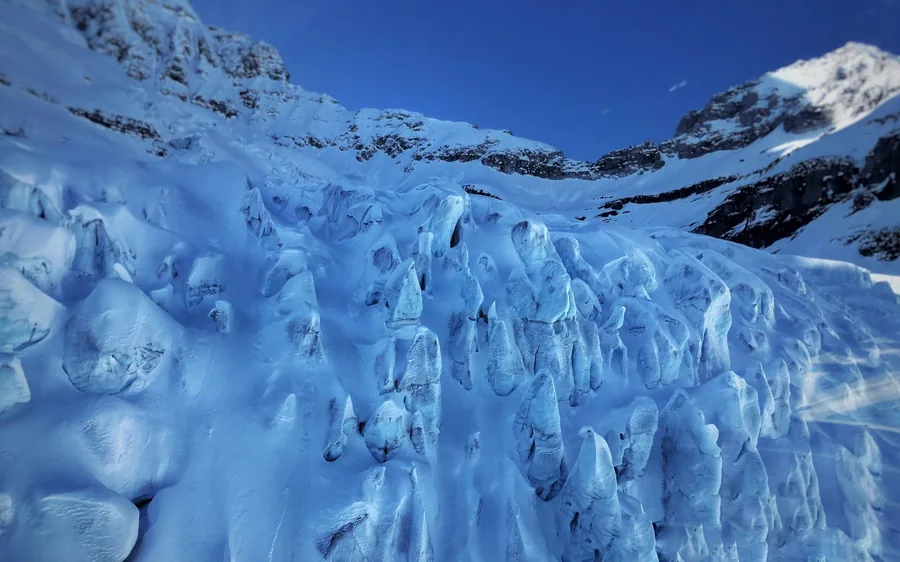
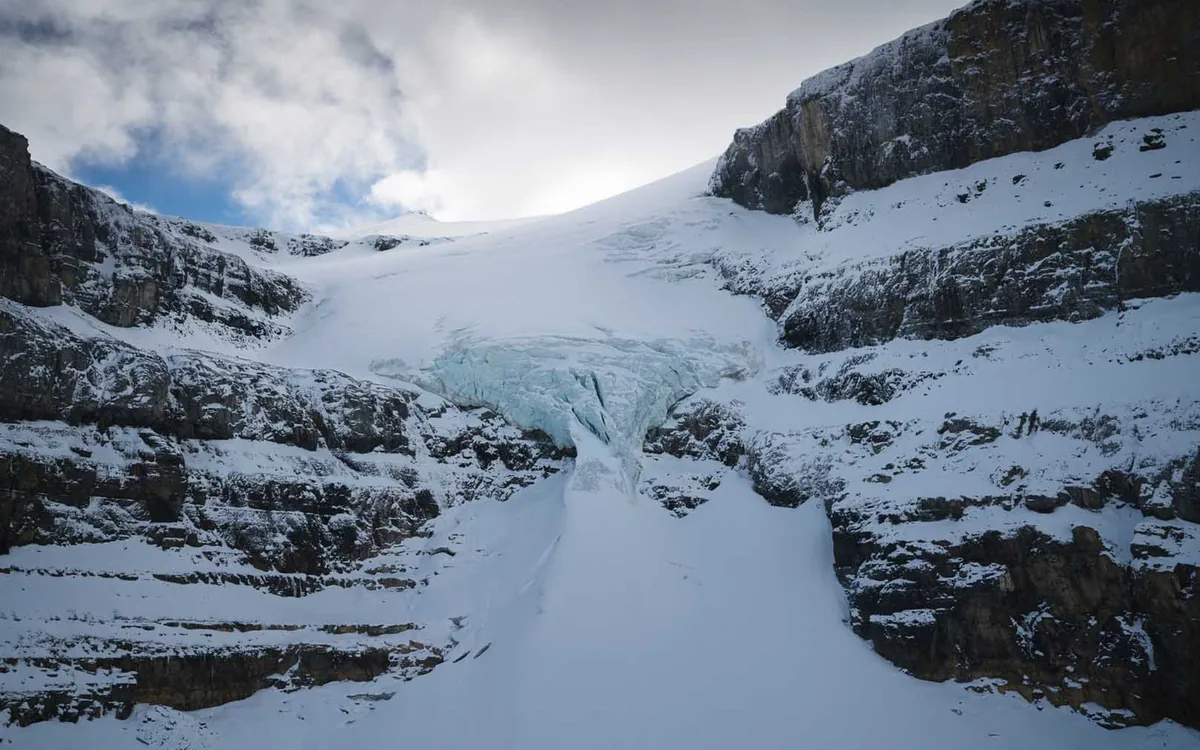
These are valley glaciers, not an icecap. Tongues of ice filling the high bowls and spilling down between ridges, with the rock walls above them and the meltwater streams below. From a Banff helicopter tour you see the whole system at once: accumulation at the top, the crevassed middle where the ice bends over a step, and the grey snout at the bottom.
The crevasses are the thing. From the ground, ice is a white slope. From two hundred metres up it is a field of blue fractures, and the blue is real — dense ice absorbs the red end of the spectrum and what comes back is that colour.
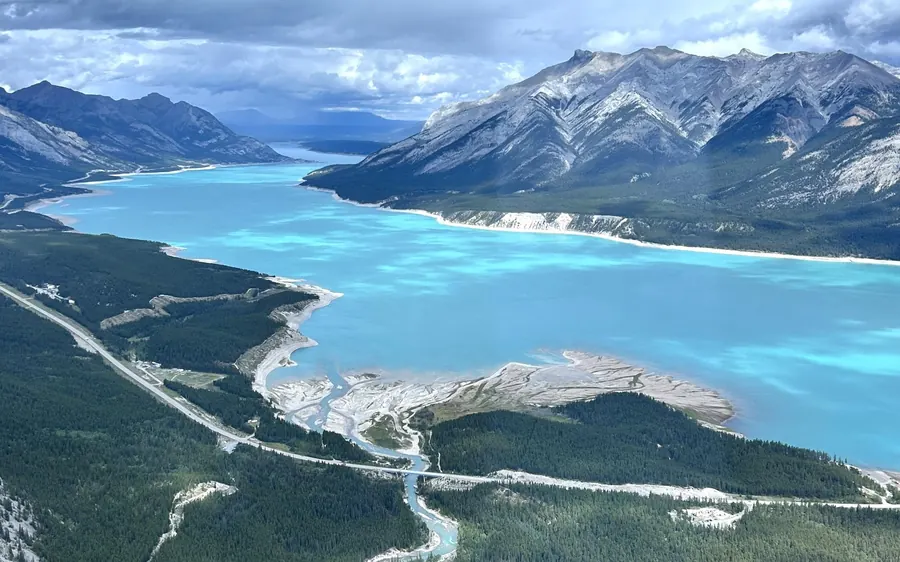
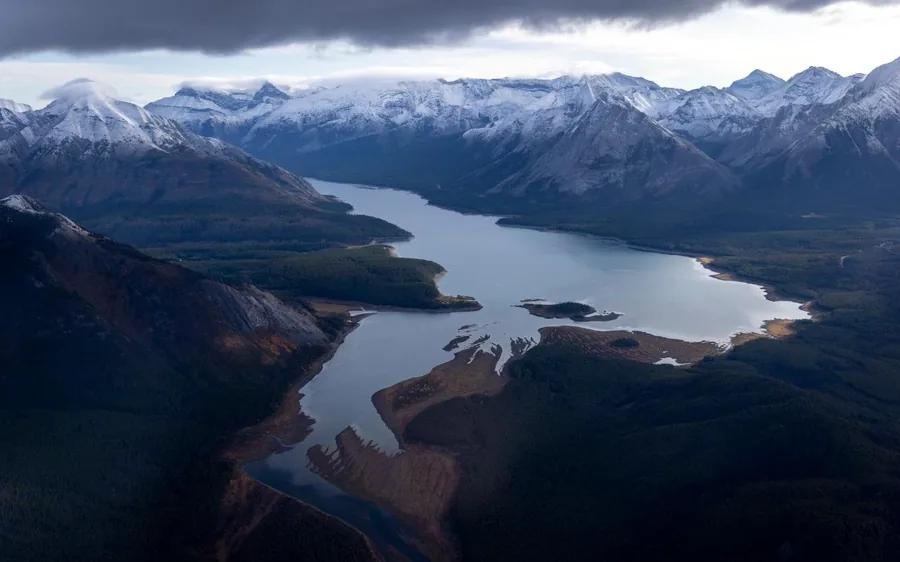
And the rock flour connection. The turquoise lakes everyone photographs are the downstream end of this ice. Meltwater carries the ground rock out of these valleys and into the lakes below. A Banff helicopter tour over the glaciers is, quite literally, a flight over where the colour comes from.
Season changes everything. By late August the winter snow has melted off and the ice is bare, crevassed and blue. By January it is all one white surface and the interest shifts entirely to shape and shadow.
Which flight for which ice
Every Banff helicopter tour here touches ice; these reach the most of it.
Thirty minutes of glaciers, waterfalls and icefields, with more ratings than anything else on this page.
Thirty-five minutes to Mount Assiniboine and the glaciers hanging below it.
Forty-five minutes across the Continental Divide, where the icefields are.
Forty-five minutes over Kananaskis Country and Mount Assiniboine Provincial Park.
Our top pick. Glaciers on the way out, and then the engine stops beside a river.
The ice stops being ice and becomes shape. A Banff helicopter tour in February is a completely different photograph from the same route in August.
The glaciers are the honest answer to why a Banff helicopter tour is worth the money. The lakes are reachable by road and by shuttle. The ice is not reachable at all.
Is it worth it→Book direct
Four listings that spend most of themselves over glaciers and icefields.
★ 4.9 · 233 reviews
★ 5 · 6 reviews
★ 5 · 1 reviews
★ 4.7 · 32 reviews
Where the ice is going
Retreating snouts, bare polished rock, fresh moraine — and the turquoise downstream depends on all of it.
Nobody puts this in a listing, and it is the part people talk about afterwards.
These glaciers are retreating. The snouts are further up their valleys than they were a generation ago, and from the air you can read it directly: bare, polished rock below the ice, and a line of loose moraine where the glacier used to end. On a Banff helicopter tour the pilot will usually point it out without being asked.
Which makes the meltwater lakes complicated. The turquoise downstream depends on rock flour, and rock flour depends on ice actively grinding bedrock. The colour everybody photographs is a product of the same process that is shrinking.
And it makes the flight a specific kind of trip. A Banff helicopter tour is not only a good morning; it is a look at a landscape that is visibly in motion, in a way that a canyon or a coastline is not.
None of which is a reason to book or not book. It is a reason to look properly when you are up there.
Reading ice from the air
A Banff helicopter tour gives you about fifteen minutes over ice. This is what to spend them on.
The big crevasse where the moving glacier pulls away from the ice frozen to the headwall.
Where the glacier bends over a step in the bedrock and fractures. The blue is thickest here.
Dark stripes down the middle of the ice, where two glaciers have merged and their edge debris runs on together.
Polished, bare and pale — ground under ice that has since retreated.
Grey with suspended rock flour, and the direct link between the glacier and the turquoise lake downstream.
North-facing cirques hold ice longest. On a Banff helicopter tour in late summer, that is where the last of it is.
Common questions
The thirty-minute flight at $199 is built around glaciers, waterfalls and icefields, and the forty-five-minute Continental Divide flight at $437 goes deepest into the ice.
Not on these listings. The two flights that land set down on provincial land beside a river and in Kananaskis Country, not on ice.
August and September, when last winter’s snow has melted off and the glaciers are bare, crevassed and blue.
Dense ice absorbs the red end of the spectrum, so what comes back to your eye is blue. It is most obvious in crevasses, where the ice is thickest.
The same system. Meltwater carries ground rock flour down into the lakes, and that suspended powder is what makes the turquoise.
No. It sits on the Banff–Jasper boundary inside the national parks, so a Banff helicopter tour does not overfly it. It is reached by road on the Icefields Parkway.
Go deeper
From $199 to $1,035, and what a minute in the air is worth.
The verdictOne recommendation for each kind of traveller, and why.
The ruleParks Canada, and where the flights actually go.
CanmoreTwenty-five minutes from Banff, and four of the flights here.
KananaskisAlpine lakes, Mount Assiniboine and the longest routes.
LandingsWhere a helicopter may set down in the Rockies, and where it may not.