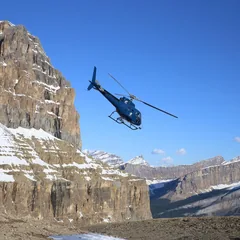
Canadian Rockies: Helicopter Flight with Exploration Hike
★ 4.9 · 105 reviews
- Our top pick: the only flight that lands and walks
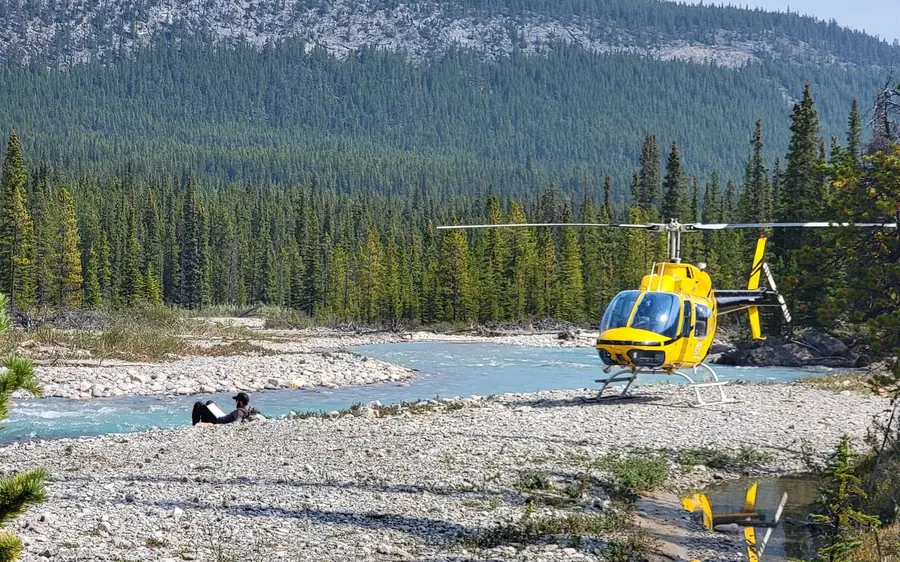
- Land by the Cline River and hike to Twin Falls
- 105 reviews at 4.9 — the best-evidenced flight here
- Free cancellation
The rules
Two things catch people out here and neither is in the listing. The first is the scale: every operator weighs every passenger at check-in, and the numbers decide where you sit. The second is the cold: the bases sit at thirteen to fifteen hundred metres and a June morning is genuinely cold. Here is every rule attached to a Banff helicopter tour, plainly.

Quick answer
You will be weighed at check-in, and passengers above a threshold set by the operator pay for a second seat. The figure varies between companies and aircraft, so declare your weight honestly at booking rather than discovering it at the desk. Everyone needs photo ID. No Banff helicopter tour lets you choose your own seat, and every one of them is colder than the town you drove from.
The weigh-in
Maximum weight, centre of gravity and thin mountain air. The scale is the aircraft talking.
It is an airframe, not an opinion. A small turbine helicopter has a maximum all-up weight and a centre-of-gravity envelope it has to stay inside, and both are checked by the pilot before every departure. At fifteen hundred metres in summer heat the margins are narrower still.
So everyone steps on a scale. Quietly, at check-in, along with everybody else on your slot. The operator then arranges the cabin so the aircraft balances — which is the real reason no Banff helicopter tour lets you pick a window.
Above a threshold, you buy two seats. Operators set the figure themselves and it differs between companies. Declaring it at booking costs exactly the same and avoids a conversation on the pad fifteen minutes before departure.
And it is routine. Nobody comments, nobody announces anything, and the whole thing takes about four seconds.
What to wear and bring
Most of it is about altitude and the walk to the aircraft rather than the flight.
The bases sit at 1,300 to 1,500 metres. A June morning here is cold and a January one is serious, and the cabin is glass on three sides.
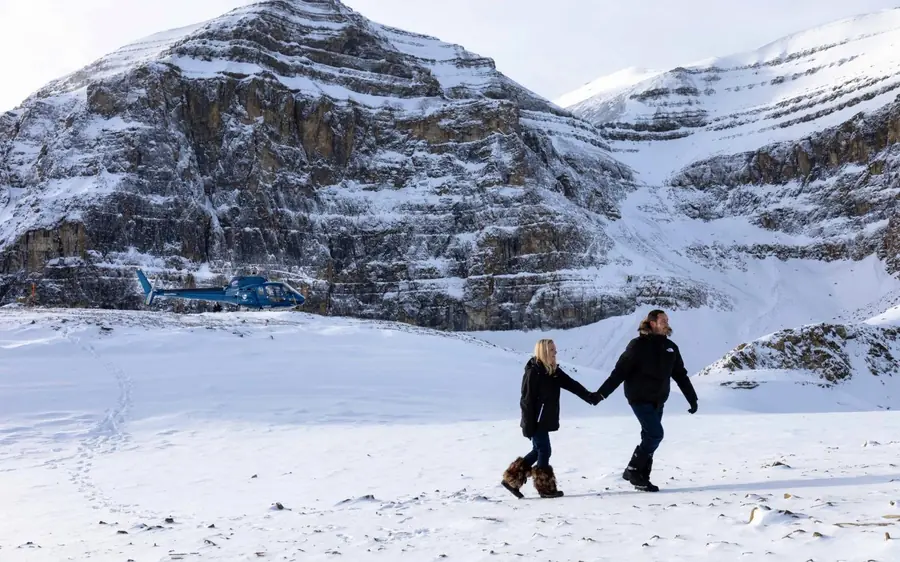
Especially on the flights that land: you will be walking on river gravel, roots or snow.
Hats and scarves stay in the building. Rotor wash takes them instantly, and a loose item near a tail rotor is a real problem.
Snow and ice at altitude are bright, and on a morning Banff helicopter tour you fly towards the sun for part of the circuit.
Checked before boarding on every listing here.
Nothing on a long neck strap in a small cabin.
The single most useful thing you can do before a Banff helicopter tour is give an honest weight at booking. It costs nothing, it takes ten seconds, and it is the difference between a seat and an argument on the pad.
What the ride is like→Book direct
The same rules apply to all four, and the private listing is the one with the most latitude over seating.
★ 4.9 · 105 reviews
★ 4.9 · 233 reviews
★ 4.9 · 15 reviews
★ 5 · 11 reviews
Access and comfort
Fine for older passengers, ask about mobility, children count in the weight, and the landing flights add real walking.
Short answers to the things people ask before booking, including where you should ask the operator rather than us.
Older passengers. Fine on every listing here. The flights are short and the step into the cabin is the only physical part; say so at check-in and somebody will help.
Mobility. None of these listings advertises wheelchair access. If that matters, ask the operator before booking a Banff helicopter tour rather than at the desk, because the pads are gravel and the cabins are small.
Children. Usually welcome with a minimum age set by the operator. They occupy a seat and count in the weight, which is worth knowing for a family of four looking at a four-seat cabin.
The flights that land. Those add an hour of walking on uneven ground. Anyone who is not comfortable on river gravel or snow should book an overflight instead.
And the altitude. Nobody notices it in the cabin, but the bases are high enough that a Banff helicopter tour in January is genuinely cold before you even board.
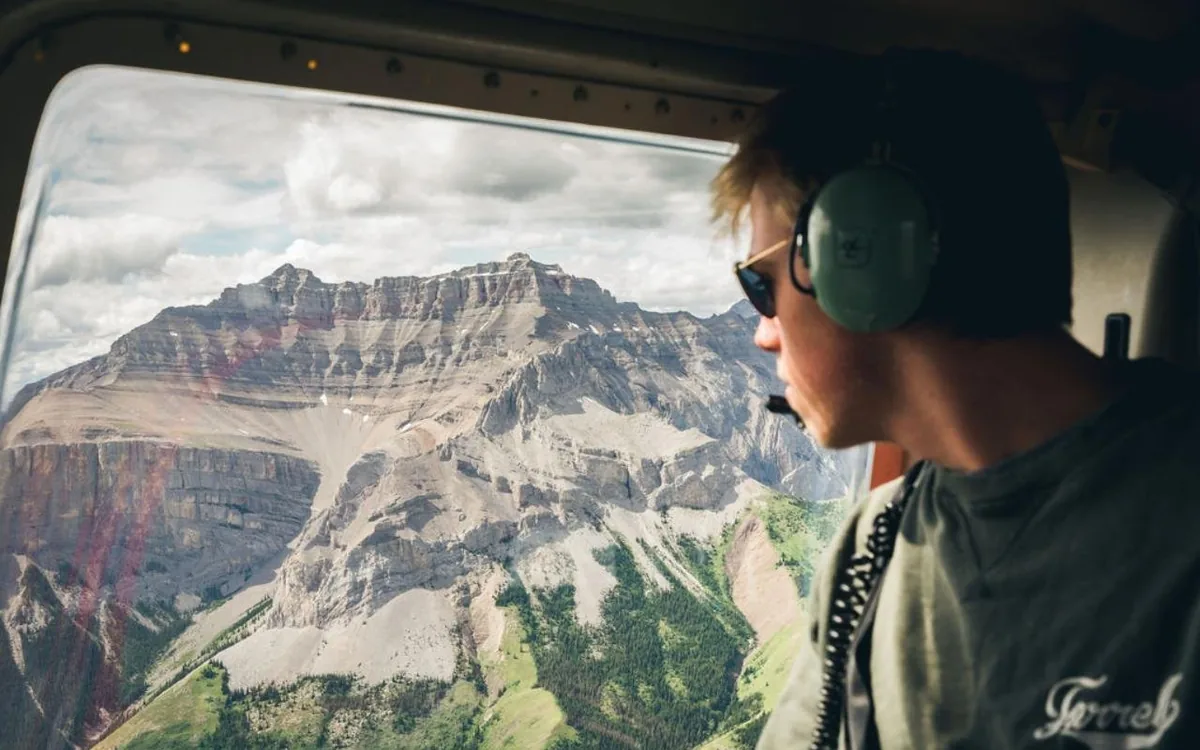
Six more things nobody mentions
None of these appears in a listing.
Use the one at the base before the briefing, on every Banff helicopter tour.
There is no hold. A small bag on your lap, and nothing more.
Snow and altitude together burn faster than a summer beach.
Rotor wash is stronger than people expect.
On a Banff helicopter tour there is no separate commentary track — the quality of the flight depends on somebody who is also flying it.
It has the most glass and the most instruments in the way. The rear seats often photograph better.
Common questions
Every operator weighs passengers and sets its own threshold above which a second seat is required. Declare your weight at booking so it is handled then rather than at the desk.
Yes, at check-in, on a floor scale. The pilot uses the figures to balance the cabin.
Usually, with a minimum age set by the operator. Children occupy a seat and count in the weight calculation.
Yes. Photo ID is checked before boarding on every listing here.
No. You can ask at check-in which side the route favours, and often the desk will tell you.
Colder than the town. The bases are at 1,300 to 1,500 metres and the cabin is unheated glass for most of a Banff helicopter tour. Take the layer.
Go deeper
From $199 to $1,035, and what a minute in the air is worth.
The verdictOne recommendation for each kind of traveller, and why.
The ruleParks Canada, and where the flights actually go.
CanmoreTwenty-five minutes from Banff, and four of the flights here.
KananaskisAlpine lakes, Mount Assiniboine and the longest routes.
LandingsWhere a helicopter may set down in the Rockies, and where it may not.