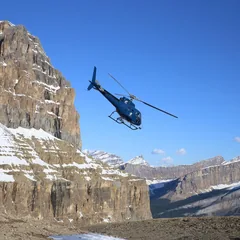
Canadian Rockies: Helicopter Flight with Exploration Hike
★ 4.9 · 105 reviews
- Our top pick: the only flight that lands and walks
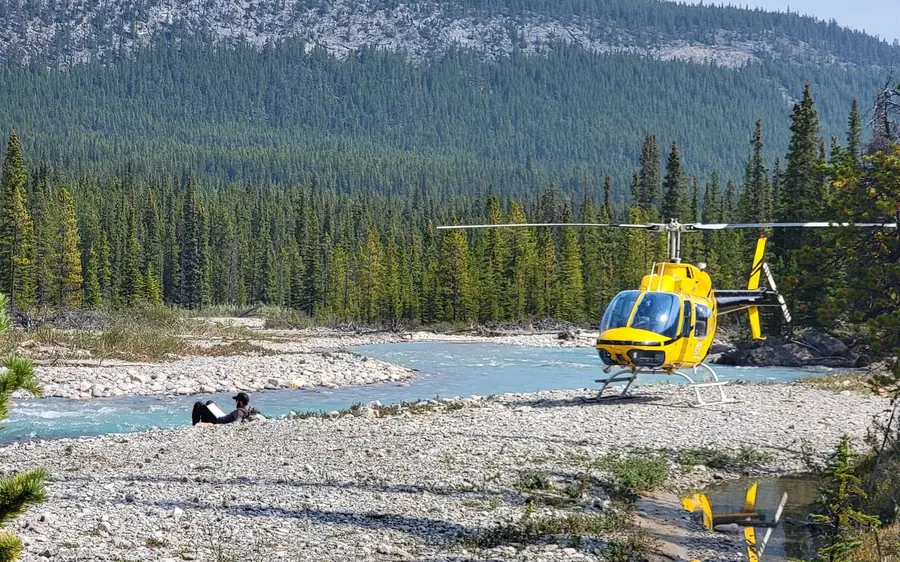
- Land by the Cline River and hike to Twin Falls
- 105 reviews at 4.9 — the best-evidenced flight here
- Free cancellation
The ride
From arriving at the helipad to walking back out is about ninety minutes, and a quarter of it is spent in the air. If you have never been in a small helicopter, this is what a Canadian Rockies helicopter flight is like on the ground, in the cabin and in the first four minutes — written by the minute rather than by the brochure.

Quick answer
Allow about ninety minutes in total for a flight of twenty to forty-five minutes. You check in, you are weighed, you are briefed, the pilot seats the cabin by weight, and then you walk out under a turning rotor. A Canadian Rockies helicopter flight is loud, close and steadier than people expect — and the moment that matters arrives about four minutes after lift-off, when the last road disappears.
Minute by minute
Weigh-in, briefing, four minutes to the last road, and then country with nothing in it.
Check-in, about thirty minutes before. Photo ID and your booking, and then the weigh-in. It is done quietly on a floor scale and it is not a formality: the pilot uses the numbers to balance the aircraft, which is why nobody chooses their own window.
The briefing. Ten minutes or so: the harness, the door, how to approach and leave the aircraft, and the rule about never walking uphill of a helicopter on sloping ground — which matters more here than on flat terrain.
The walk out. In a line, ducking, usually with the rotor already turning. Loudest part of the day.
Lift-off, and the valley falls away. Unlike a Canadian Rockies helicopter flight in flat country, there is no gentle approach here: the front ranges rise around you within seconds of leaving the pad.
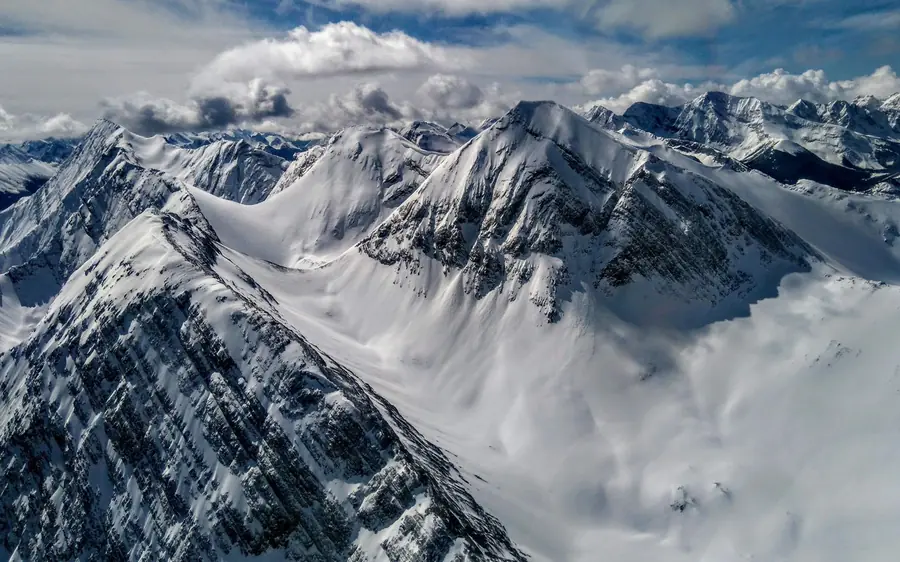
Four minutes in, the last road goes. After that there is nothing under you but rock, ice and water for the rest of the flight. This is what people remember, and it is the reason the whole thing exists.
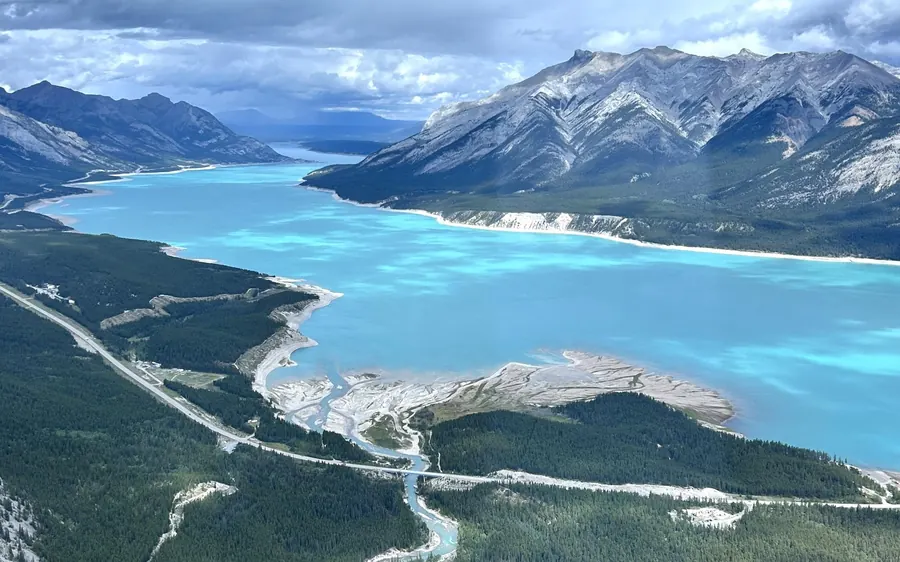
The rest. Glaciers in the shadowed bowls, alpine lakes with no trail to them, and on the longer routes Mount Assiniboine standing clear of everything around it. Then back down the valley, which looks entirely different now.
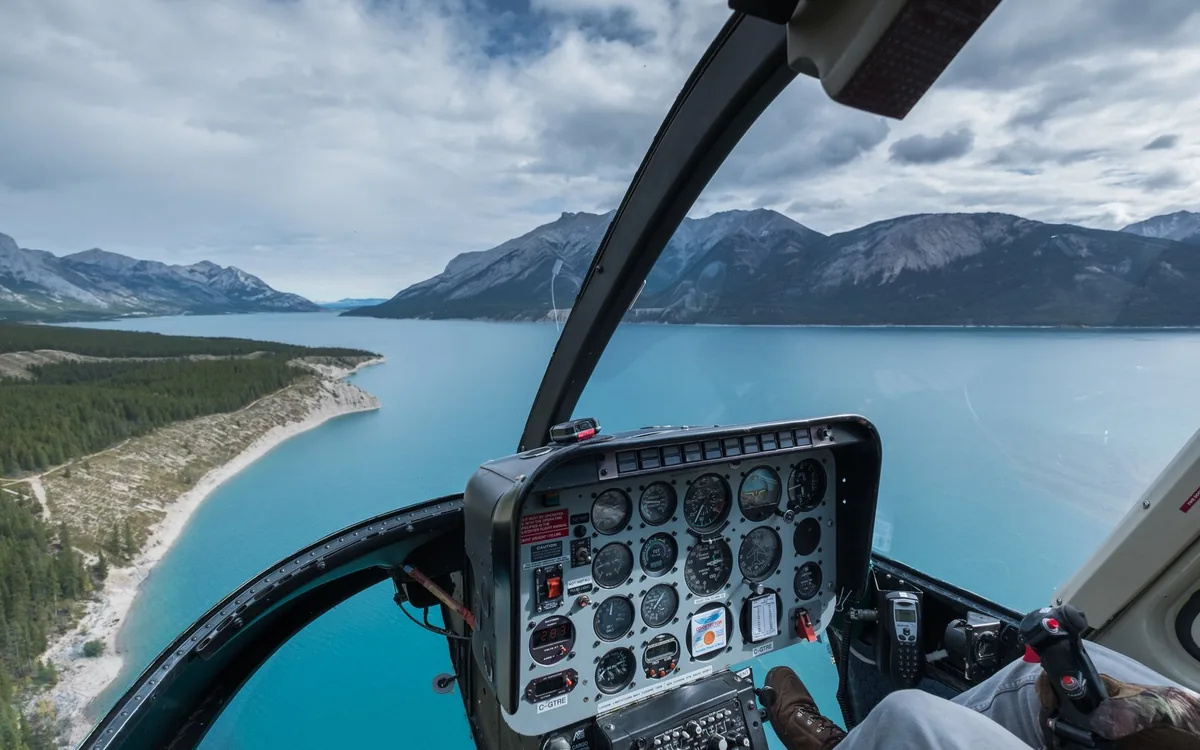
In the cabin
The answers people want and the listings do not give.
Morning air over the Rockies is stable and the turns are gentle. Motion sickness is uncommon on a Canadian Rockies helicopter flight in the first slot.
Rotor noise is constant; through the headset the pilot is perfectly clear, and naming the peaks is most of what makes the landscape legible.
The cabin is balanced by weight. Ask at check-in which side the route favours — the desk usually knows — but it is not a choice.
Bubble windows are excellent overhead and distort at the edges. Lean in, keep the lens off the perspex, brace your elbows rather than the camera.
Bases sit at 1,300 to 1,500 metres and the cabin is glass on three sides. A June morning needs a real layer.
Hats, scarves and long straps stay in the building. You walk out under a turning rotor.
The best single decision you can make about a Canadian Rockies helicopter flight is the time of day. The first slot has the calmest air, the cloud still sitting low in the valleys rather than on the peaks, and the longest shadows on the glaciers.
When to fly→Book direct
The one that lands, the cheapest, the closest to Banff, and the private cabin for two.
★ 4.9 · 105 reviews
★ 4.9 · 233 reviews
★ 4.9 · 15 reviews
★ 5 · 11 reviews
Photographing it
Wide lens, flat glass, no flash, expose for the snow, and put it down before the end.
Wide, always. The mistake everyone makes is zooming in on a peak. What makes a Canadian Rockies helicopter flight photograph well is the relationship between things — ice above a lake, a valley with no road in it, a horn of rock standing clear of everything around it.
Shoot through flat glass. Bubble windows are superb overhead and distort at the edges. Lean in, keep the lens off the perspex so vibration does not travel into it, and brace your elbows rather than the camera.
Turn the flash off before you board. It bounces straight back off the canopy, and on a morning Canadian Rockies helicopter flight there is more light than you need.
Expose for the snow. Bright ice fools most cameras into underexposing everything else. If your phone lets you nudge exposure up, do it before you lift off rather than in the air.
And put it down for the last five minutes. Everyone who has taken a Canadian Rockies helicopter flight says the same thing afterwards: the part they remember is the part they watched.
Nervous flyers
A Canadian Rockies helicopter flight is a mild experience by the standards of small aircraft, and there are things that make it milder.
Pilots here do this thousands of times a season and will seat you accordingly.
Morning air over the Rockies is the calmest of the day, in every month.
Every listing on this site flies sealed. There is no open-door option to worry about.
Twenty-five minutes over the Three Sisters is a gentler introduction than forty-five across the Divide.
Flying at altitude on an empty stomach is worse than flying on a small breakfast.
A Canadian Rockies helicopter flight climbs out of a valley, crosses a ridge and comes back. There is no aerobatics and no hovering over a drop.
Common questions
About ninety minutes from check-in to walking back out, for a flight of twenty to forty-five minutes. The weigh-in, the briefing and the walk out sit outside the advertised duration.
Less than people expect. The aircraft fly with doors closed, morning air over the Rockies is stable, and the turns are gentle. Say so at check-in if you are nervous.
It is uncommon. If you are prone to it, take the first slot of the morning, when the air is calmest.
No. Every listing on this site flies with doors on and windows closed.
Four to six passengers depending on the aircraft, plus the pilot. Everyone is weighed and seated to balance the machine.
Photo ID, sunglasses, a real layer, and a camera with a strap you can control.
Go deeper
From $199 to $1,035, and what a minute in the air is worth.
The verdictOne recommendation for each kind of traveller, and why.
The ruleParks Canada, and where the flights actually go.
CanmoreTwenty-five minutes from Banff, and four of the flights here.
KananaskisAlpine lakes, Mount Assiniboine and the longest routes.
LandingsWhere a helicopter may set down in the Rockies, and where it may not.